by Addison Dehaven, South Dakota State University. Original Post: https://phys.org/news/2023-06-crops-contribute-soil-health.html
Worldwide, farmers are being challenged with a variety of issues, including growing populations, a changing climate and soil degradation, among many others. To combat these challenges, researchers are looking for solutions and have begun to focus their research on the viability of sustainable agriculture practices, like cover crops.
“One of the main ways to improve the sustainability of agriculture is to utilize cover crops,” said Deepak Joshi, a recent Ph.D. graduate from South Dakota State University’s Department of Agronomy, Horticulture and Plant Science.
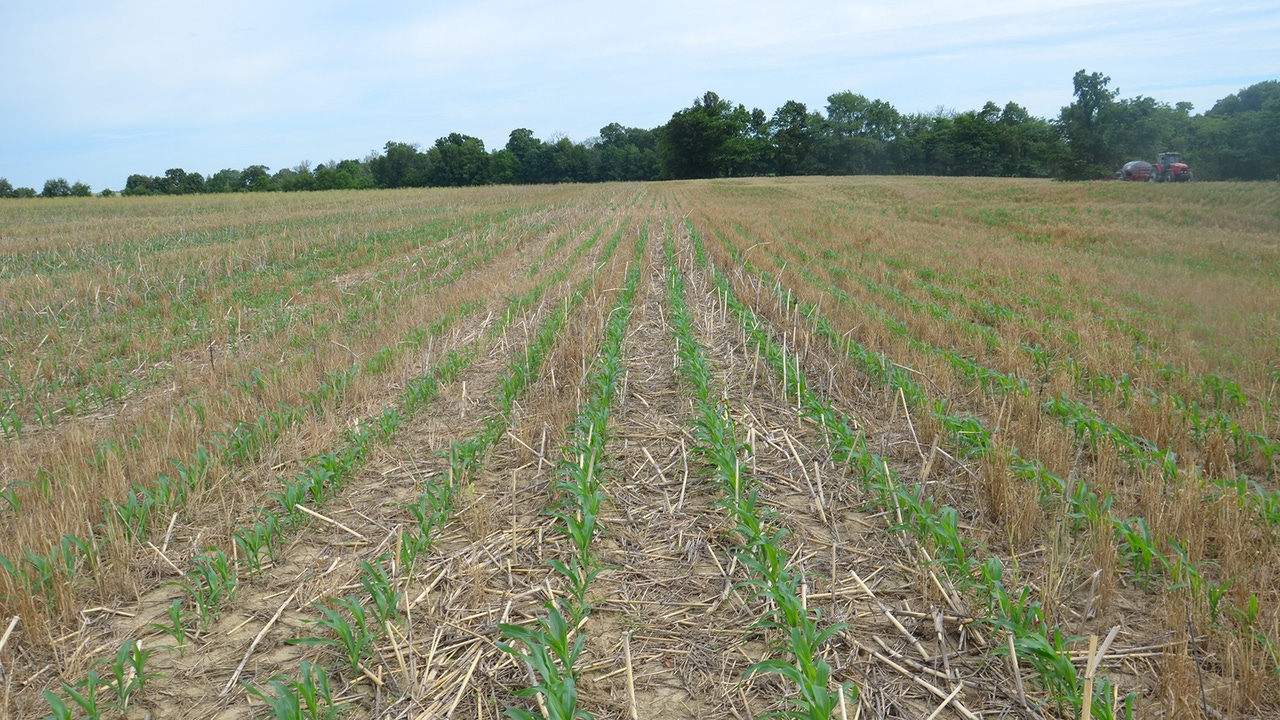
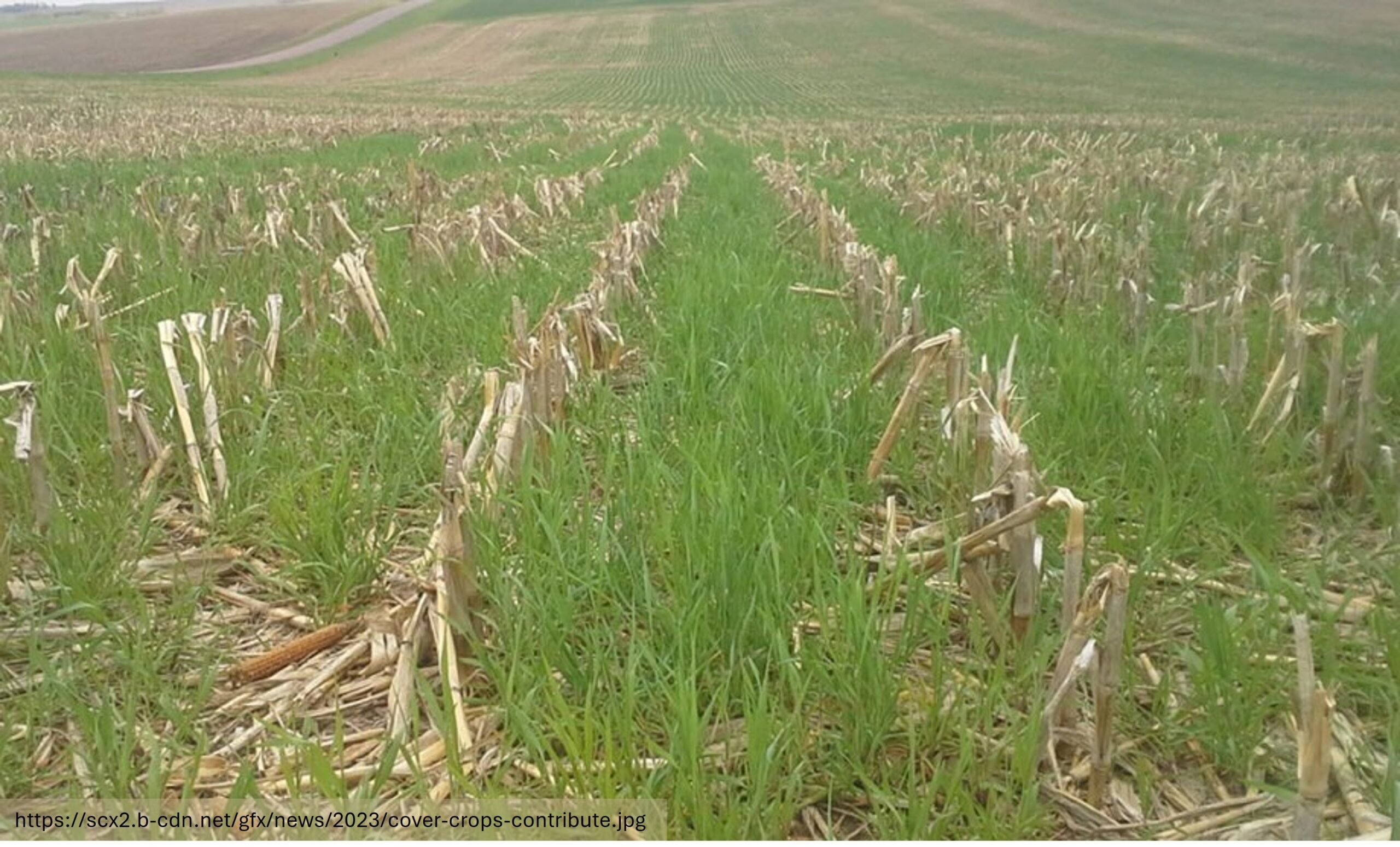
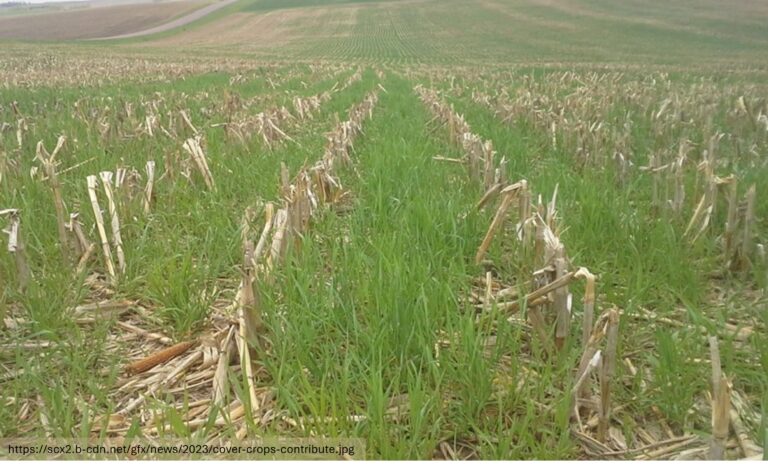
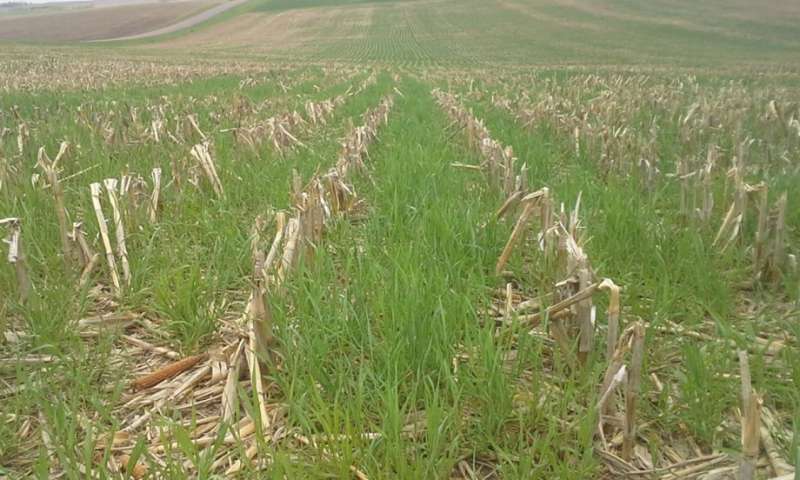
A cover crop is a plant that is used primarily to slow erosion and improve soil health. Cover crops are planted in the short time period following a harvest and are “killed off” prior to the planting of the next cash crop.
“It is assumed that cover crops will improve soil health and soil carbon,” Joshi added.
Joshi’s research provided an overview of conservation agriculture technology as strategies to minimize soil degradation, climate change challenges, and food insecurity issues in developing countries. It also investigated the impact of cover crops on soil organic carbon and greenhouse gas emissions in a corn cropping system through a meta-analysis of previous cover crop studies as well as through field experiment. The paper is published in the Agronomy Journal.
Cover crops
Experimental research on cover crops is widespread with more than 61 peer-reviewed cover crop studies having been completed and digitally available through May 2022. The challenge—as Joshi points out—is that the studies do not always provide a clear answer on the benefits of cover crops.
“There are numerous studies conducted about cover crops, but it is unclear whether they increase or decrease soil carbon,” Joshi said. “If you read through the published articles, some report an increase and others a decrease. The information provided was unclear.”
For his own research, Joshi combined all known cover crop studies (61) on corn cropping systems into one meta-analysis. It was found that cover crops increase the soil organic carbon by 7.3%—a significant amount.
Soil organic carbon is the measurable component of soil organic matter and is a key element in determining soil quality. A higher soil organic carbon percentage indicates greater soil health.
“Ultimately, cover crops are taking carbon dioxide from the atmosphere and stirring it into the soil,” Joshi said. “That means cover crops can help improve the growing climate problem and also help improve soil health.”
Joshi found that current corn fields with cover crops have a soil organic carbon (SOC) sequestration rate of .8 Mg. This means that if all U.S. corn fields used cover crops, 29.12 million Mg SOC could be sequestered annually, which equals 107 million metric tons of carbon dioxide. According to the Environmental Protection Agency, this is equivalent to the greenhouse gas emissions from nearly 247.5 million barrels of oil or 23.8 million gasoline-powered vehicles driven for one year.
“From the two-year field experiment conducted, we found rye cover crop during growth stage reduced N2O emission while it increased during decomposition. However, when we combined both growth phases, cover crop and no cover crop treatment had similar emission. This means that cover crops have no effect on GHG emissions, instead it improves soil health by improving soil microorganisms, soil moisture and soil carbon,” Joshi said.
“It will also ultimately increase the crop yield for the next harvest season as well,” Joshi added.
The meta-analysis showed that adopting cover crops increased corn yield by 23%.
While cover crops have long had low adoption rates for farmers in the Upper Midwest, more are gaining a clear understanding of the proven benefits, and adoption rates have begun to increase in recent years.
More information: Deepak R. Joshi et al, A global meta‐analysis of cover crop response on soil carbon storage within a corn production system, Agronomy Journal (2023). DOI: 10.1002/agj2.21340
Journal information: Agronomy Journal