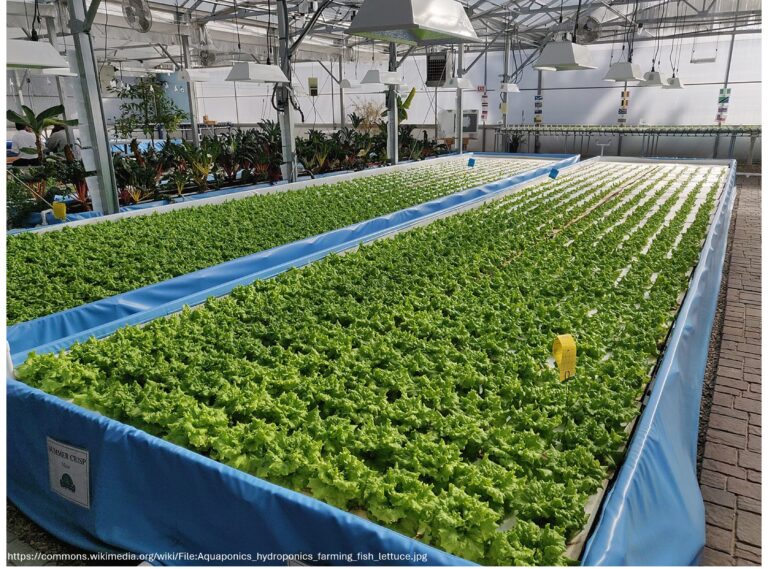
by Patricia Tembo, 29th April 2025. Original Post: https://www.foodformzansi.co.za/aquaponics-basics-get-your-system-thriving/
One of the most compelling reasons to choose aquaponics is its sustainability. As a closed system, this method uses much less water than traditional farming. A farmer shares tips on how to approach this production method.
Aquaponics presents a transformative solution for sustainable food production in a country where arable land and water are becoming increasingly scarce. By combining fish farming with soilless plant cultivation in a single, closed-loop system, aquaponics maximises resource efficiency while minimising environmental impact.
This farming method requires significantly less water than traditional agriculture, making it especially beneficial for communities grappling with limited access to irrigation. At the forefront of this innovative approach is MJ Nunes, an agriculturalist and the owner-director of Sable Creek Farms in Limpopo.
With a background in agricultural management and a passion for system design, Nunes has built a fully integrated aquaponics facility that prioritises energy efficiency, biological balance, and market-driven crop production. Nunes offers tips from extensive hands-on experience to unpack the core principles and practical strategies for building and operating a successful aquaponics system.
Understand why aquaponics works
One of the most compelling reasons to choose aquaponics is its sustainability. Due to it being a closed system, aquaponics uses significantly less water than traditional farming.
“It means we save about 95% water compared to traditional or other farming techniques,” Nunes says. Additionally, aquaponics is entirely organic. Farmers cannot use synthetic chemicals or pesticides because they would harm the fish in the system.
Key to the success of this configuration is filtration (e.g. radial flow or swirl filters) to remove solids and biological processes (biofilters) to convert ammonia into usable nitrates. This ensures nutrient availability for crops while protecting fish health.
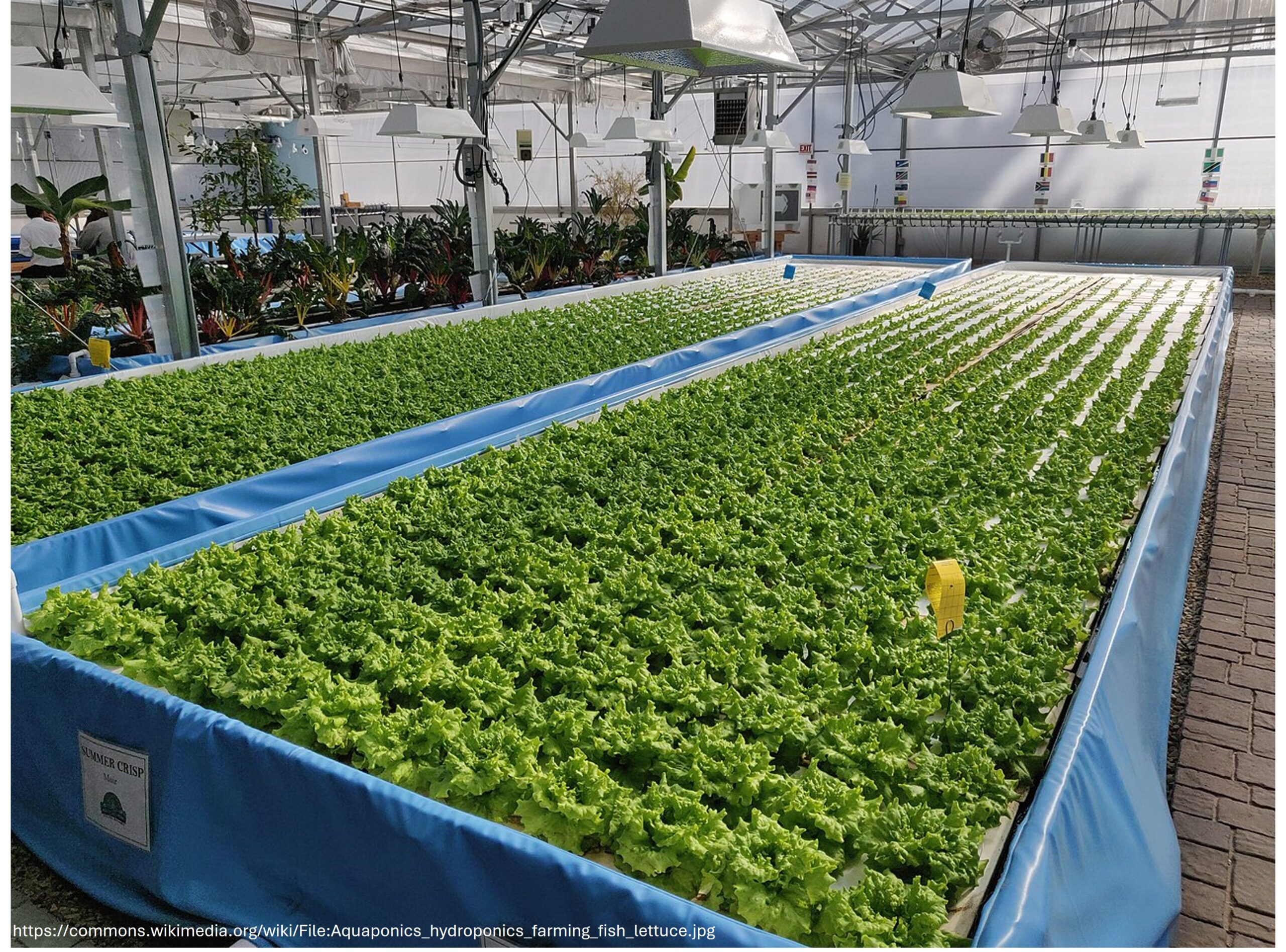
“Each system includes four aquaculture tanks connected to six media beds and six deep water culture (DWC) rafts, all in the same loop. The solids are mechanically and biologically filtered before the water reaches the plants,” he explains.
Another unique benefit of the aquaponic system is its suitability for urban or small-scale farming, especially in water-scarce areas like South Africa.

Recognise the dual income potential
One of the major advantages of aquaponics is that it can produce two sources of income: fish and crops. “Your produce in aquaponics grows about two times faster and quicker than growing in the soil. Your turnaround time for your produce from seed to harvest is much quicker.”
While aquaponics systems can be costly to set up, Nunes notes that the investment is worth it in the long run due to reduced operating costs and high efficiency. Operating costs are much lower compared to conventional farming, especially for those growing organic produce.
“Aquaponics production cost is much lower than farming in soil. Your price for your organic produce doesn’t have to be sky high because it’s got the name organic.”
Stocking and feeding strategies
Sable Creek produces market-size tilapia, targeting 200g to 350g weights within a 7 to 8-month cycle. Tilapia, being hardy and temperature-tolerant, are ideal for South African climates.
“We run two different aquaponic systems – each one 1000 to 3000 litres per tank, depending on the age and size of fish. We have our own nursery system where we grow fry and juveniles to fingerlings, and then we grade them before placing them into our aquaponic systems,” he says.
By staggering fish ages and using a grading system, Nunes explains that this reduces in-tank competition and mortality. It also ensures steady nutrient output, which translates to consistent plant growth.

Choose the right crops
Nunes explains that some crops thrive in aquaponics systems more than others. For optimal results, focus on fast-growing, water-loving crops.
“Herbs do extremely well, lettuces do extremely well, tomatoes do extremely well, peppers do well, chillies do well in the system,” he says. Plant varieties are selected based on nutrient demand, growth rate, and market potential.
The use of media beds supports root crops and beneficial bacteria, while DWC rafts are ideal for lighter leafy greens like lettuce, basil, and rocket.
Monitoring and water quality management
Water chemistry is at the heart of system health in aquaponics. The pH, ammonia, nitrite, nitrate, and dissolved oxygen (DO) levels must be constantly monitored and balanced for both plant and fish requirements.
“If any value goes out of range, the entire system is affected,” says Nunes. To prevent disease and maintain productivity, the facility is designed with biosecurity protocols such as foot baths, mesh screening, and limited access to tanks.
Resource efficiency and power usage
In line with sustainability principles, Nunes highlights energy minimisation and system automation. “The whole system is designed to run on less than 2kWh per hour. We use variable speed pumps, gravity-assisted drainage, and off-grid options like solar aeration.”
These interventions make the system resilient to load shedding and reduce operational costs, a critical aspect for small-scale commercial viability.
Business and market integration
Nunes emphasises the importance of full traceability, compliance, and certification where required. He encourages aspiring aquaponics producers to plan for market access early.
“We harvest, wash, chill and deliver on the same day. This shortens the time to shelf, so retailers get fresher produce and it lasts longer for consumers.” He also stresses the importance of working within strict quality control frameworks.
“Our lettuce goes from field to chiller in under an hour, and we keep it at 2–5°C throughout the cold chain.” An aquaponic system is not only a production model but a system with room for research and further innovation, aimed at showcasing replicable technologies for urban and peri-urban farmers.
“The goal is to build a model that can be scaled up or down, with minimal environmental impact and maximum food output per square metre,” he says.
Biosecurity
Disease control is critical to maintaining healthy fish and crops. “Sanitation is a big thing. If I go to a fish farm today and go into my greenhouse again, I could be bringing something in through my shoes,” Nunes cautions.
He ensures every greenhouse is equipped with foot baths and sanitation areas, minimising risk. Viruses like tobacco mosaic can spread through human contact, which is why visitors who smoke must take precautions.
Embracing technology
Nunes recommends incorporating simple yet effective technologies to run efficient systems. To manage South Africa’s unreliable power supply, his systems include global system for mobile communication (GSM) units.
“If the power does go off after it’s changed over to our solar unit, it will then alert us through a proper alarm to tell us that the power is off.” Nunes is also developing a digital water parameter monitoring system, replacing manual test kits.