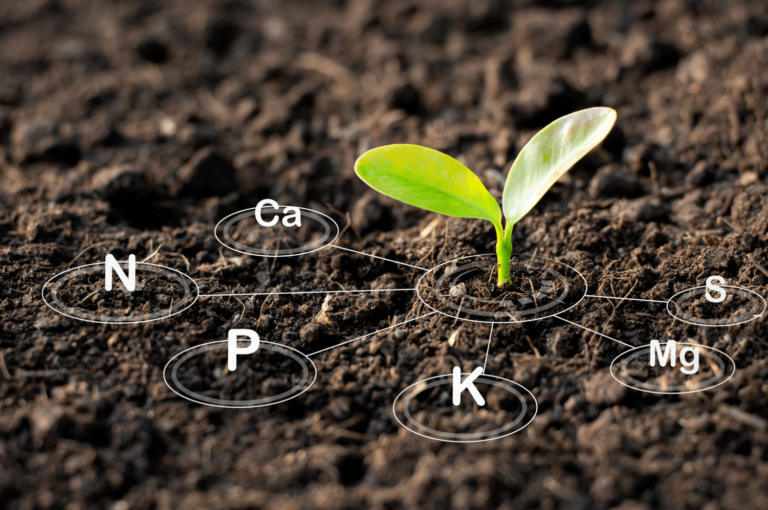
Essential Plant Nutrients
Plants can make their own food by capturing the energy from sunlight to convert carbon dioxide and water into sugar. But, to stay healthy and bear flowers and fruit, they take additional nutrients out of the soil. Seventeen chemical elements are known to be important to a plant’s growth and survival. Understanding each nutrient’s role and value will ensure your crops will thrive, producing maximum yields. Optimal yields can only be produced when all these nutrients are in proper supply. If just one nutrient is lacking in the soil, crop yields will suffer.
The 17 chemical elements are divided into two main groups: non-mineral and mineral:
Non-Mineral Nutrients
The non-mineral nutrients are hydrogen (H), oxygen (O) and carbon (C) which are found in the air and water. Through photosynthesis (meaning “making from light”), plants use the energy from the sun to change carbon dioxide (CO2 – carbon and oxygen) and water (H2O – hydrogen and oxygen) into starches and sugars. These starches and sugars are the plant’s food (and a lot of them are our food).
Since plants get carbon, hydrogen, and oxygen from the air and water, there is little farmers can do to control how much of these nutrients a plant can use.
Mineral Nutrients
The 14 mineral nutrients, which come from the soil, are dissolved in water and absorbed through a plant’s roots. There are not always enough of these nutrients in the soil for a plant to grow healthy. This is why many farmers use fertilizers to add the nutrients to the soil.
The mineral nutrients are divided into two groups:
Macronutrients and micronutrients (also called trace elements). These terms are not based on the importance of the nutrients, but rather the amount of the nutrients needed by the plant. Macronutrients are needed in much greater quantities than micronutrients.
Macronutrients
Macronutrients can be broken into two more groups:
Primary and secondary nutrients
The primary nutrients are nitrogen (N), phosphorus (P), and potassium (K). These major nutrients usually are lacking from the soil first because plants use large amounts for their growth and survival.
The secondary nutrients are calcium (Ca), magnesium (Mg), and sulphur (S). There are usually enough of these nutrients in the soil, so fertilization is not always needed. In addition, usually sufficient amounts of calcium and magnesium are added when lime is applied to acidic soils. Sulphur can be found in sufficient amounts from the slow decomposition of soil organic matter but is often neglected and can have a big impact on crop quality.
Micronutrients
Plants need micronutrients in very small (micro) quantities, but they are still essential for plant health and growth. The micronutrients are boron (B), copper (Cu), iron (Fe), chloride (Cl), manganese (Mn), molybdenum (Mo), zinc (Zn) and nickel (Ni).
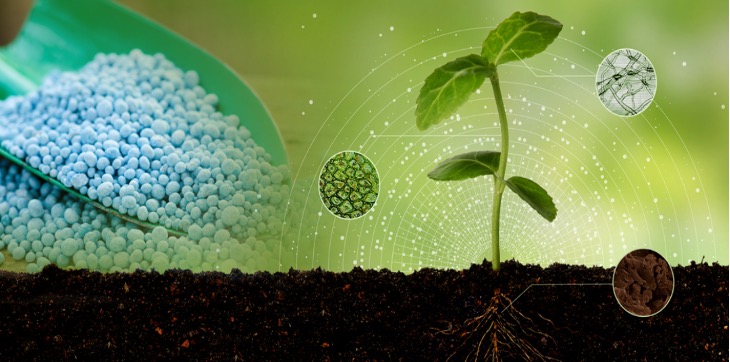
Plant Nutrient Functions in the Plant
Macronutrients:

Nitrogen (N)
- Nitrogen is a part of all living cells and is a necessary part of all proteins, enzymes and metabolic processes involved in the synthesis and transfer of energy.
- Nitrogen is a part of chlorophyll, the green pigment of the plant that is responsible for photosynthesis (creating energy from sunlight and CO2).
- Helps plants with rapid growth, increasing seed and fruit production and improving the quality of leaf and forage crops.
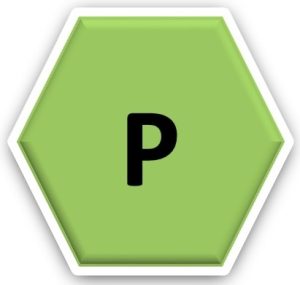
Phosphorus (P)
- Like nitrogen, phosphorus is an essential part of the process of photosynthesis.
- Involved in the formation of all oils, sugars, starches, etc.
- Helps with the transformation of solar energy into chemical energy; proper plant maturation; withstanding stress.
- Effects rapid growth.
- Encourages blooming and root growth.

Potassium (K)
- Potassium is absorbed by plants in larger amounts than any other mineral element except nitrogen and, in some cases, calcium.
- Helps in the building of protein, photosynthesis, fruit quality and reduction of diseases.
- Involved in opening of stomata
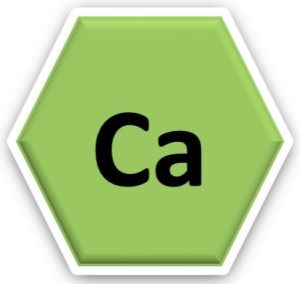
Calcium (Ca)
- Calcium, an essential part of plant cell wall structure, provides for normal transport and retention of other elements as well as strength in the plant.
- It is also thought to counteract the effect of alkali salts and organic acids within a plant.
Magnesium (Mg)
- Magnesium is part of the chlorophyll in all green plants and essential for photosynthesis.
- It also helps activate many plant enzymes needed for growth.

Sulphur (S)
- Essential plant food for production of protein.
- Promotes activity and development of enzymes and vitamins.
- Helps in chlorophyll formation.
- Improves root growth and seed production.
- Helps with vigorous plant growth and resistance to cold.
Micronutrients:

Boron (B)
- Helps in the use of nutrients and regulates other nutrients.
- Aids production of sugar and carbohydrates.
- Essential for seed and fruit development during pollination
Copper (Cu)
- Important for reproductive growth.
- Aids in root metabolism and helps in the utilization of proteins.
Chloride (Cl)
- Aids plant metabolism.
- Chloride is found in the soil.
Iron (Fe)
- Essential for formation of chlorophyll.
- Iron is required for metabolic functions related to respiration.
Manganese (Mn)
- Functions with enzyme systems involved in breakdown of carbohydrates, and nitrogen metabolism.
- Manganese is important for plant defense.
Molybdenum (Mo)
- Helps in the utilisation of nitrogen
Zinc (Zn)
- Essential for the transformation of carbohydrates.
- Regulates consumption of sugars.
- Part of the enzyme systems that regulate plant growth.
Nickel (Ni)
- Nickel is a key component of selected enzymes involved in N metabolism and biological N fixation.
- Nickel is the most recently discovered micronutrient; it is required in small amounts by plants.
- Leguminous crops like bean and cowpea require more Ni than other crops because nickel plays an important role in nodulation and N fixation.