JOHANNESBURG – Africa, a continent blessed with abundant natural resources, is also home to a significant portion of the world’s population reliant on traditional cooking methods. According to the International Energy Agency (IEA), nearly four out of five people in Africa still cook their meals using traditional cooking fuels such as wood and charcoal which cause deforestation and carbon pollution.
The nexus between clean cooking, carbon emissions, and human health is undeniable. Indoor air pollution caused by traditional cooking kills approximately half a million people annually in Africa, primarily women and children, according to an IEA report.
The health implications of traditional cooking are staggering.
Women and children, who bear the brunt of cooking responsibilities, are exposed to harmful smoke, leading to respiratory diseases, eye infections, and other health complications. Indoor air pollution from cooking is a leading cause of premature death in many African countries.
This health crisis, combined with the environmental impact, makes a compelling case for a shift to cleaner cooking solutions.
Change is often difficult. People have cooked in these ways for generations, therefore it has perhaps been overlooked as a major global health issue.
In Paris earlier this year, national presidents and CEOs of major energy companies attended an encouraging International Energy Agency (IEA) summit. The summit addressed traditional cooking, the health issues, potential solutions and the role of carbon finance. There was a commitment of more than $2.2 billion towards enabling cleaner cooking in Africa, from entities such as the African Development Bank, Norway and the European Commissions, as well as energy majors such as Total and Shell.
By investing in the infrastructure to provide clean cooking solutions such as liquefied petroleum gas (LPG), bioethanol and electricity, Africa can dramatically improve the health and well-being of its citizens. These solutions not only reduce indoor air pollution but also contribute to climate change mitigation.
However, the challenge is that all these solutions have a cost attached which often makes it unaffordable for households to switch to a cleaner cooking solution.
Collaboration between governments, international organisations, and private sector companies can help mobilize the necessary resources and expertise to fund these solutions. In particular, they can create carbon credits that can generate a revenue stream which can be used to subsidize the sale of these cookstoves. This enables entrepreneurs to develop products and the infrastructure required to deliver clean cooking solutions to households.
There is an opportunity for Africa to transition to cleaner cooking fuels while generating substantial revenue through carbon credit sales to developed countries or companies seeking to offset their carbon footprint. The transition to clean cooking can be a win-win situation.
The revenue generated from carbon credit sales can enable companies to expand their operations further, and governments may receive a share of proceeds which can be invested in improving healthcare infrastructure and supporting sustainable development initiatives. This creates a virtuous cycle where improved health, environmental benefits, and economic growth reinforce each other.
As an example, this year RMB provided funding to KOKO, a climate tech company leading this transition, replacing demand for charcoal through supplying over 1.3 million homes with a bioethanol clean cooking solution. The resultant carbon revenues are shared with households as a non-government energy subsidy, enabling even the poorest households to switch.
To capitalise on the carbon credits opportunity, some African countries are enabling carbon credits developments and introducing clear governance. Additionally, governments can create supportive policies and incentives to encourage investment in clean cooking infrastructure. Investing in training and capacity building will empower local communities to participate in the carbon market and benefit from the proceeds.
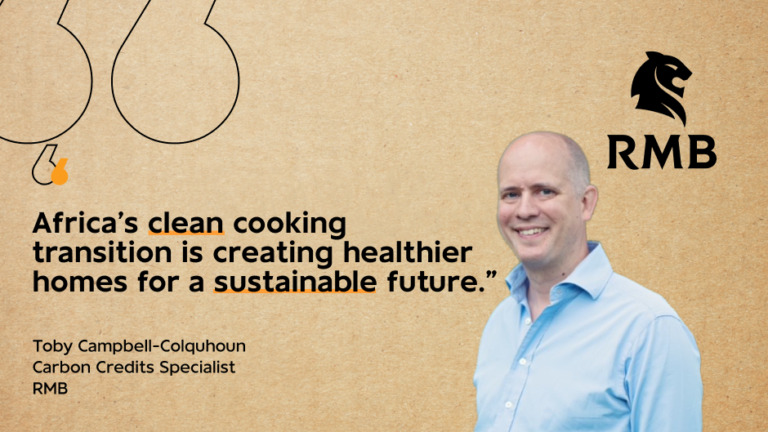
Africa’s transition to clean cooking is not merely an environmental or health imperative; it is also an economic opportunity.
By embracing clean cooking solutions and leveraging the carbon market, Africa can improve the lives of hundreds of millions of people, contribute to global climate action, and build a more sustainable future.
The potential of Africa to lead the global clean cooking revolution is immense. With the right policies, investments, and partnerships, the continent can turn a significant challenge into a catalyst for progress and prosperity.